Five rules the recorder actually enforces
These are settings in the app, not a privacy page. They are on by default and each one is a switch you can see.
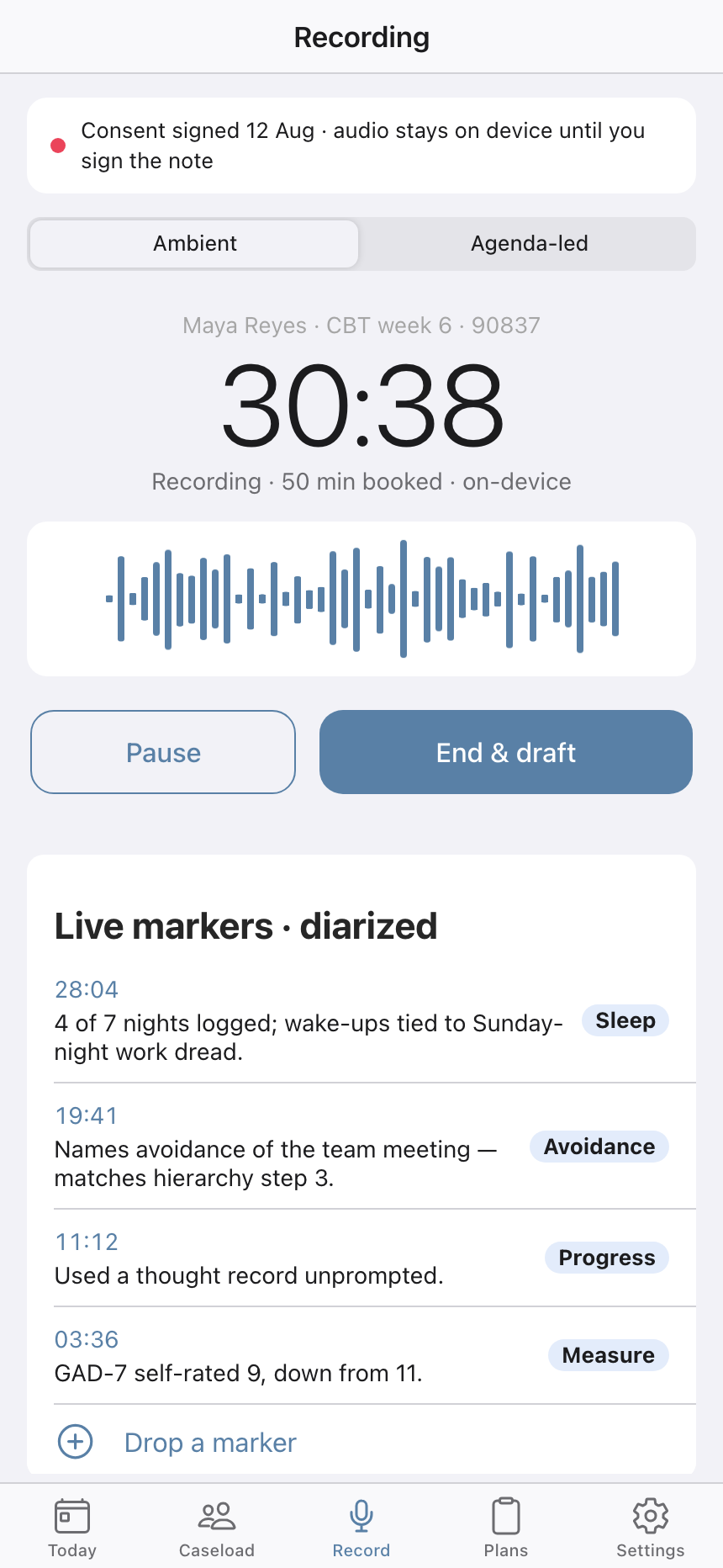
| Consent before capture | The recorder refuses to start without a current signature |
|---|
| On-device audio only | Audio never leaves the phone; only the transcript syncs |
|---|
| Delete audio after signing | Transcript and note retained per agency policy |
|---|
| Visible recording banner | Persistent indicator for the person in the room |
|---|
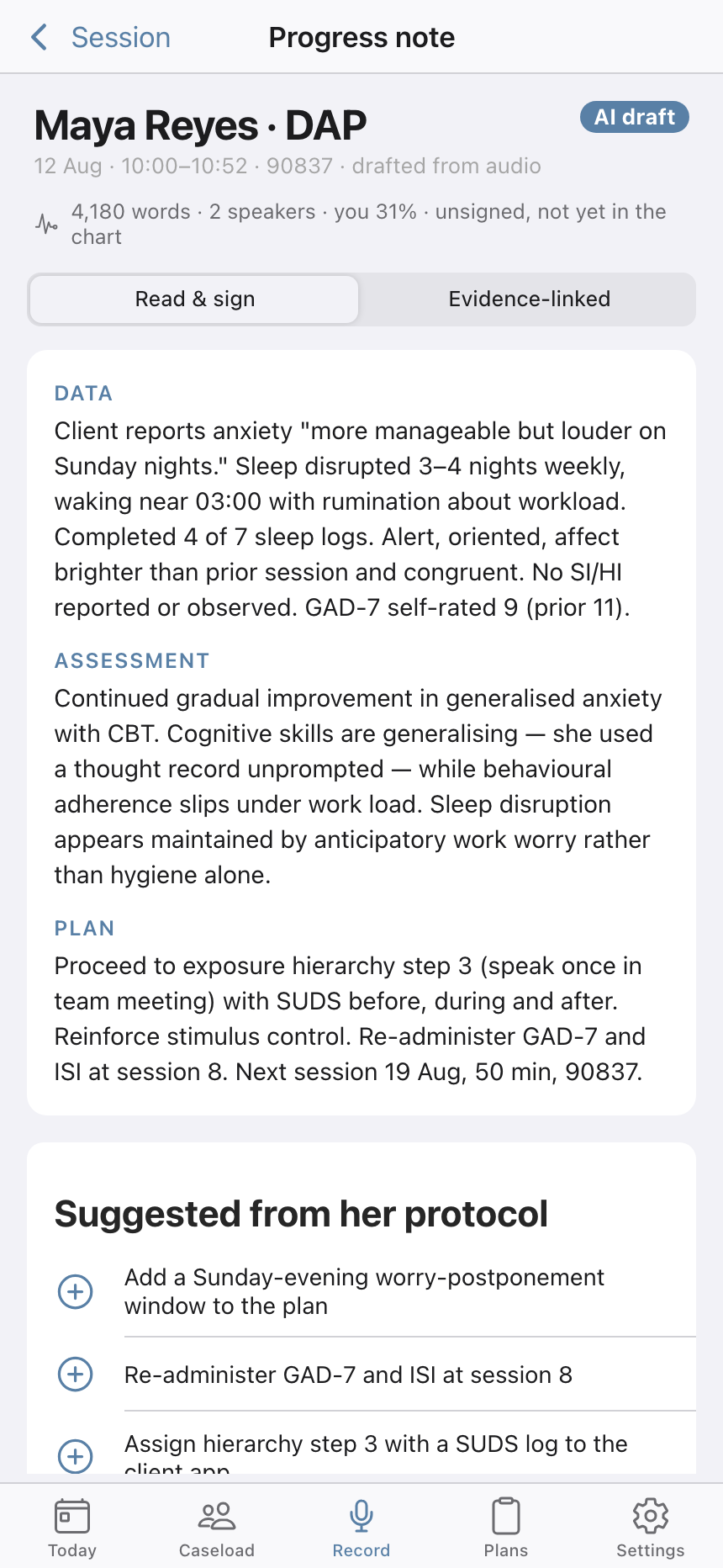
| AI suggestions in notes | Drafts stay unsigned until you accept them |
|---|
Treatment plans, and whether they are working
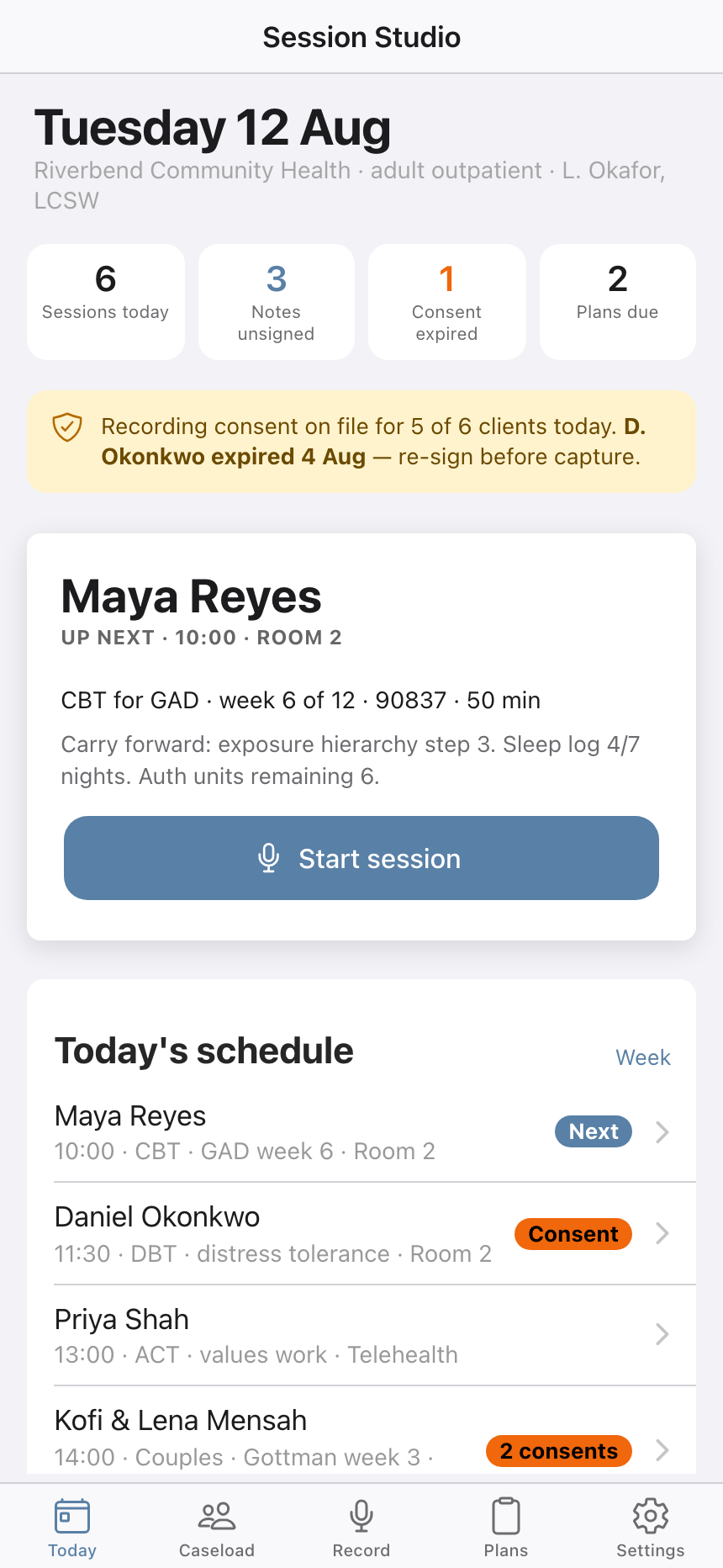
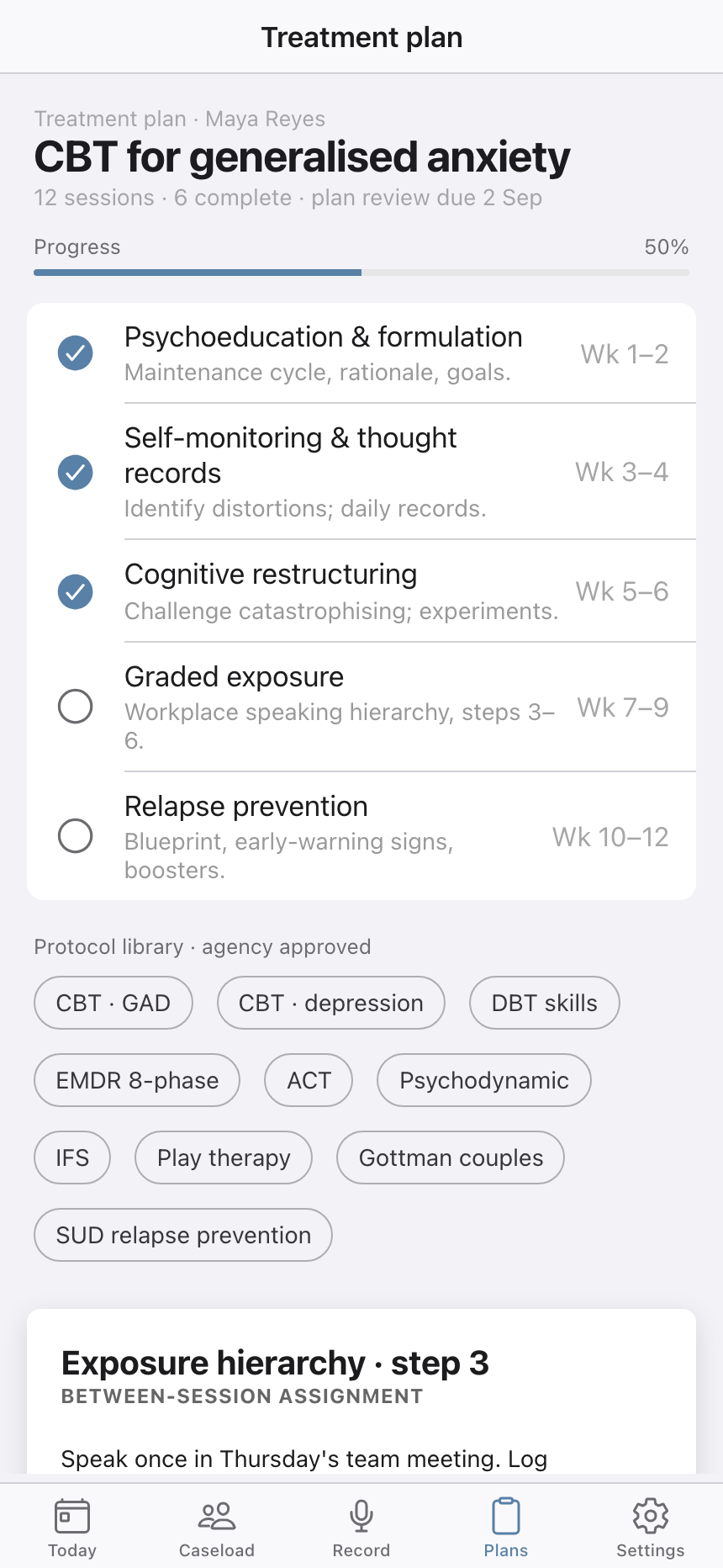
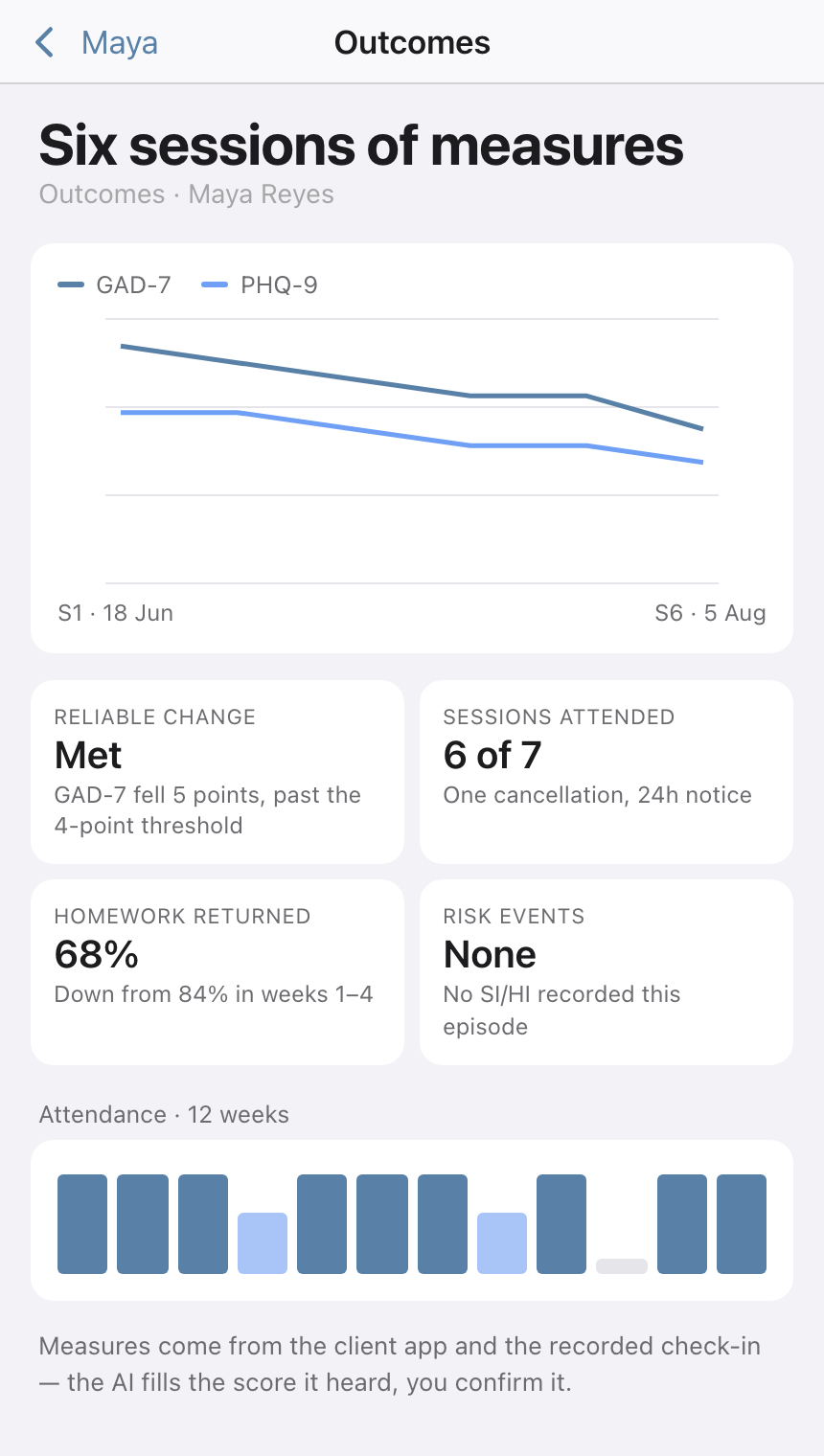
Each client runs against a named, agency-approved protocol — CBT for GAD, DBT skills, EMDR 8-phase, ACT, IFS, Gottman couples, SUD relapse prevention and more — broken into phases with week ranges, so "week 6 of 12" means a specific place in a specific ladder.
| Psychoeducation & formulation | Weeks 1–2 |
|---|
| Self-monitoring & thought records | Weeks 3–4 |
|---|
| Cognitive restructuring | Weeks 5–6 |
|---|
| Graded exposure | Weeks 7–9 |
|---|
| Relapse prevention | Weeks 10–12 |
|---|
Billing that follows the note
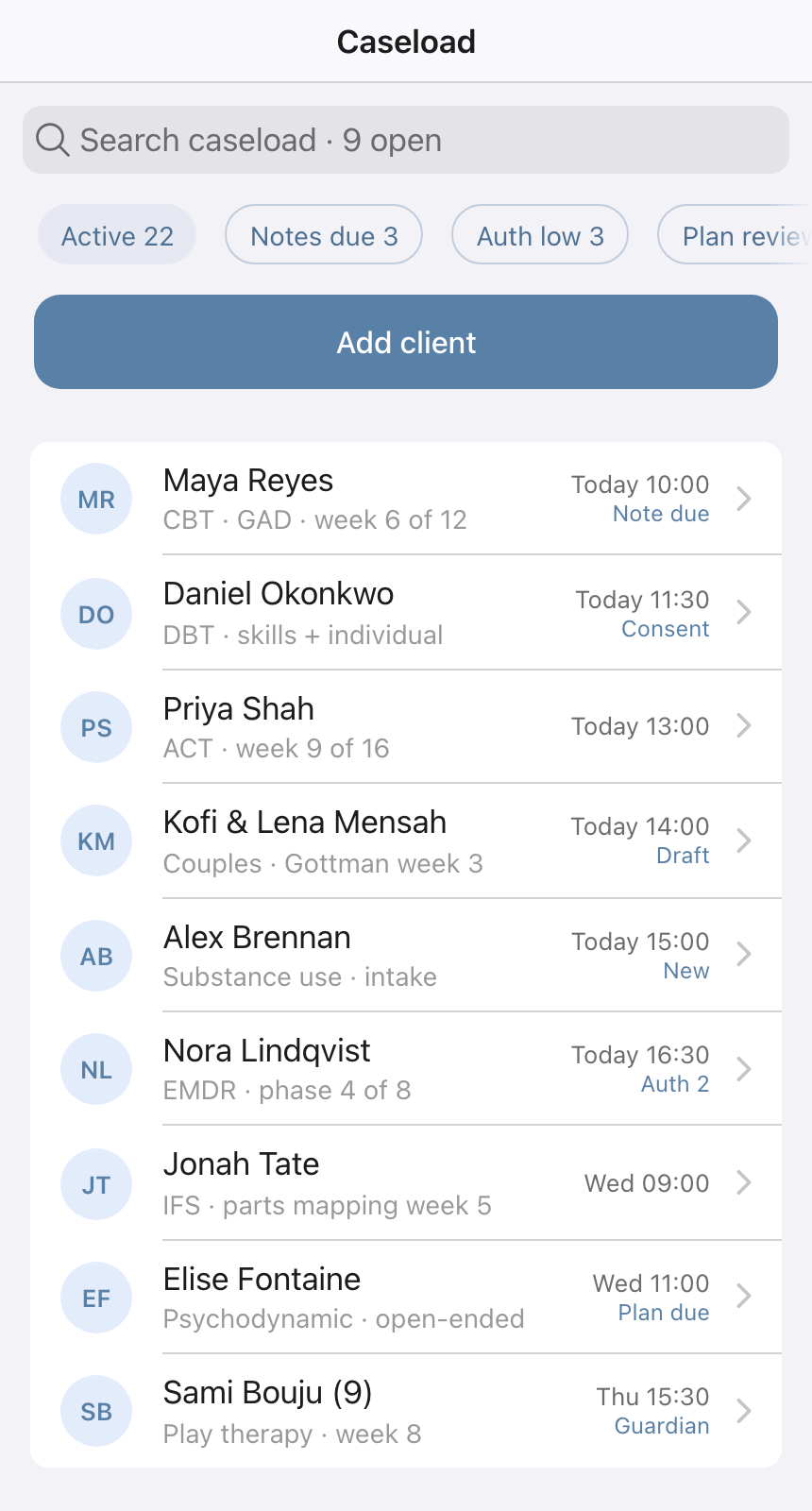
CPT codes are suggested from the session — 90791 for intake, 90834 and 90837 for individual, 90847 for family — and you confirm before anything is submitted. Claims that cannot go yet are labelled with why: unsigned, needs detail, or authorization low.
An audit trail and a co-signer
Signing routes the note to a named supervisor for co-signature and writes an audit row. Settings keeps the last 24 hours of that trail visible, each entry stamped with who did it and when, and it exports for supervision.